

Sampling Struggles: Managing and Solving Issues in the Sampling Stage
The sampling stage is critical to get right, but how to we manage and overcome issues when they arise?

Topics
📅 Why proper planning is crucial to your sampling process
🏭 Working with your factory and understanding limitations
🧵 Managing the design review stage and how to navigate it
🎽 Fit sessions and translating information onto the tech pack effectively
🧷 Why mock ups and clear communication are critical to a successful sampling process
I’ve spoken before about the rollercoaster that sampling is. On the one hand, you have the excitement of seeing your physical product built from a concept for the first time. On the other hand, your first samples are often underwhelming, or not quite what you expected them to be.
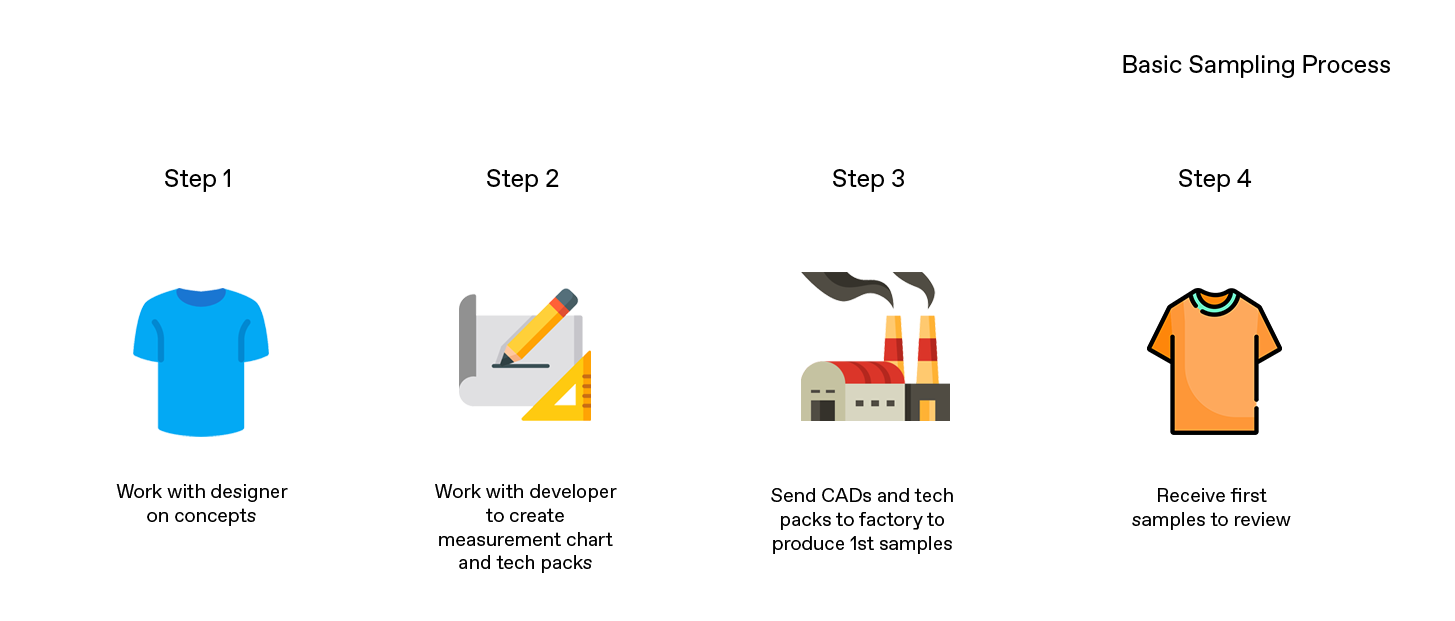
Bigger brands these days develop samples in-house - like an atelier - to which they then send off to the factory to mass produce. This, of course, reduces the margin for error during sampling and production. However, not all brands are big brands. A small brand will likely have to go down the traditional route, which can be seen below;
Planning
Managing the sampling process doesn’t just come down to product, it comes down to time. Time is an issue, no more so than in sampling. As a brand founder, your job is to map out your timeline of when you need the final samples by and work backwards. Why this is so difficult is that unforeseen issues along the way are inevitable, so it’s crucial you give yourself a time buffer in case anything throws the timeline off track (and it will).
Torsa Tales
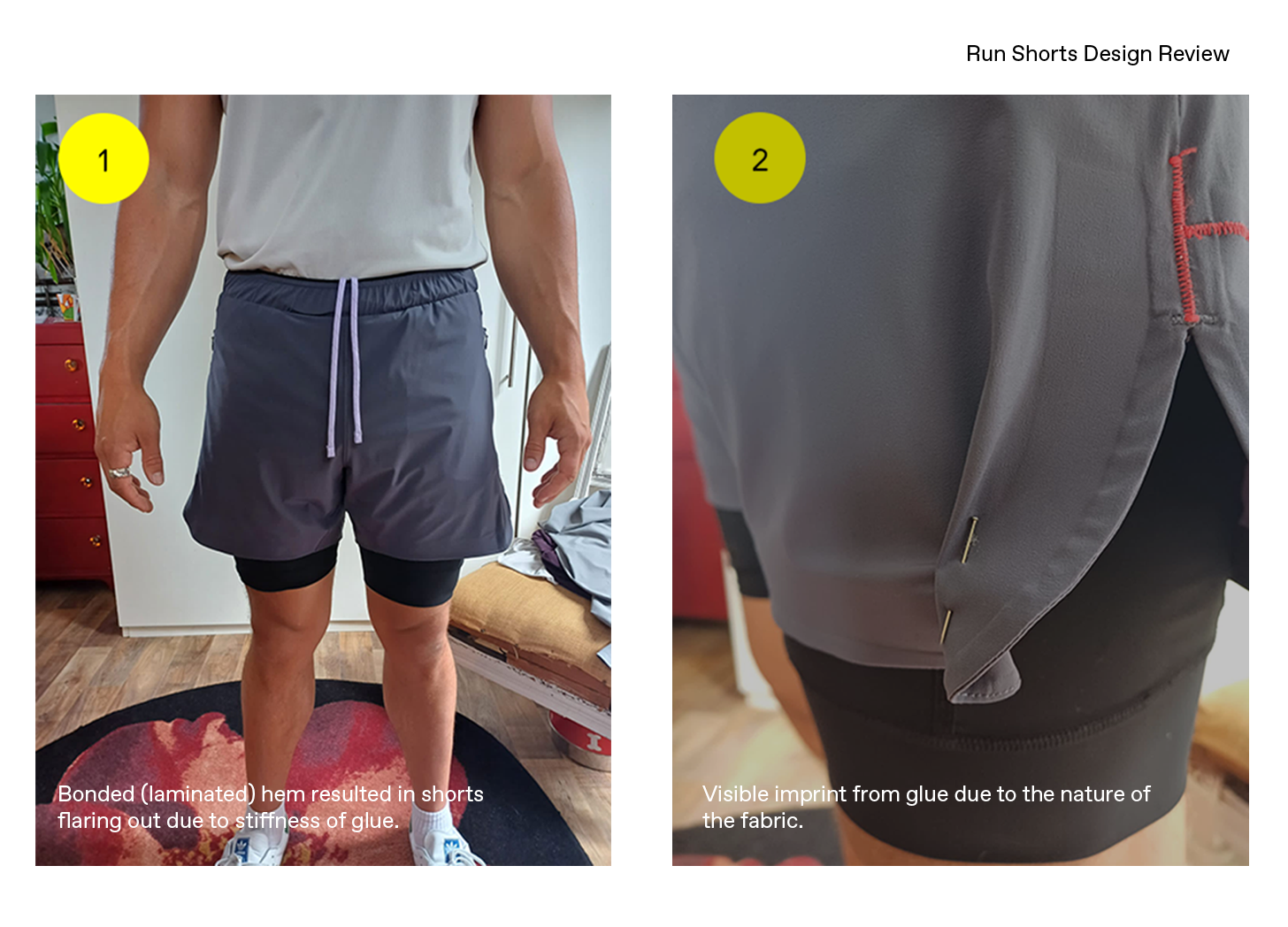
For our new AW24 collection, we set out to design a lightweight running short with a stretch liner. We sourced the fabric from Italy and the liner from France, and the factory got to work creating the first sample. When we received the first sample, the fabric was too delicate to handle a bonded hem, leaving an imprint and stiffness from the glue which made the short flare out. The total cost of the garment also far exceeded what we were able to pay, so instead of adapting the style to that fabric, we were forced to recreate the design and choose a completely new concept. This set us back 8 weeks for that one style.
Stories like this are commonplace during the sampling process. Therefore, proper planning is critical for ensuring you meet your deadlines for launch. This could be anything from meeting wholesalers in their buying window to present your collection, planning a seasonal launch, or launching product for a certain event (London marathon collection for example). The importance of proper planning and managing your timelines really can’t be overlooked.
I’d highly recommend implementing a Gantt chart, or similar, to manage your project. A Gantt chart is a good way to get an overview of your project, track and implement milestones, and assign people the different stages of certain projects.
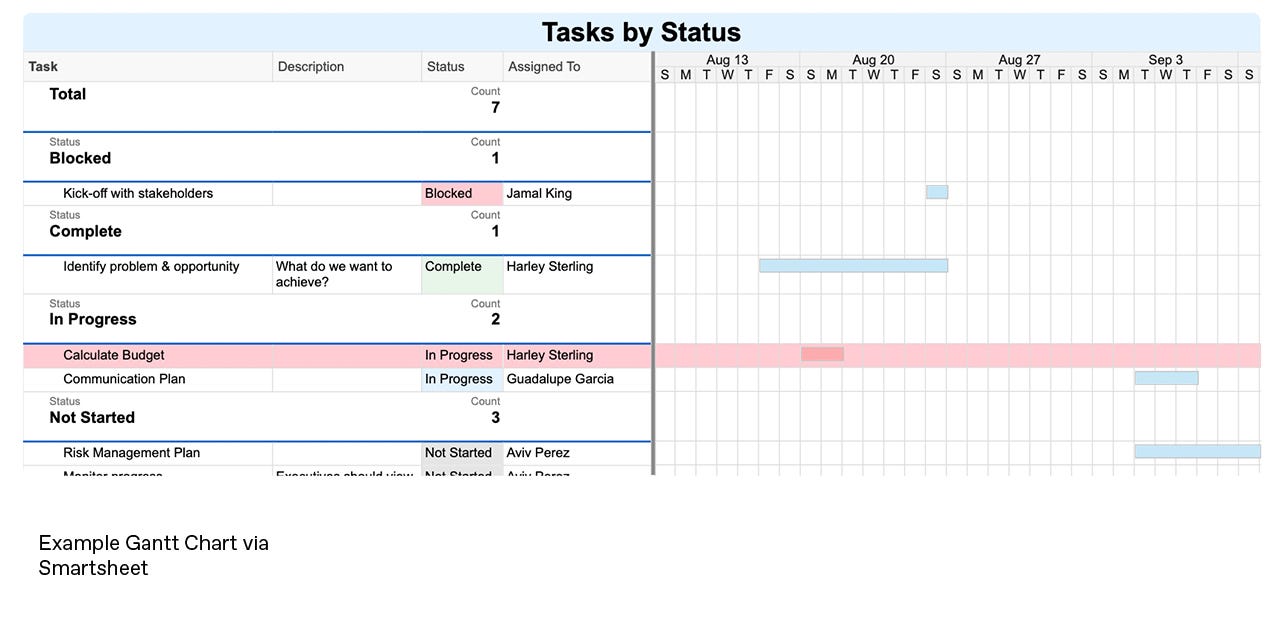
Why this is so crucial in sampling and prototyping is that it’s a process that involves a lot of moving parts, such as;
Factory tech pack review
Questions surrounding the tech packs and CADs
Measurement spec and building the pattern in-house
Expected sample lead time with factory
Fabric lead times and imports from mills - do they have your chosen fabric in stock?
Trim lead times and import from multiple suppliers
Sampling issues - instructing factory how to overcome
Shipping samples to your head office
Internal review from design team
Fit sessions and update of measurement chart
CAD updates and final update of tech packs
A number of other stages go into the product development process, but these are just a few which take the precious resource of time. You can read more about a detailed insight into the product development process below;

Factory
Regardless of the factory you work with, when you’re going to someone with a tech pack and CAD, rather than a finished in-house sample to replicate, there is always going to be issues during sampling. Although I am very proud of the quality of factory we work with, I have never received a first sample, (or second sample for that matter), that I have signed off for approval.
Understanding and knowing your factory is a crucial step in the management of sampling. What do I mean by this? Well, certain factories will specialise in certain garments, and this is a good thing if you’re an established brand. However, if you’re a start-up with a 6-piece collection, you’re not going to want to work with multiple factories - you’ll ideally work with one, or two, maximum. So, when it comes to sourcing your factory, be very diligent about what sort of product they specialise in. Having a clear idea of what you’re going to produce is an important step - you want to visit factories knowing what sort of garment or range of products you’re going to create with them.
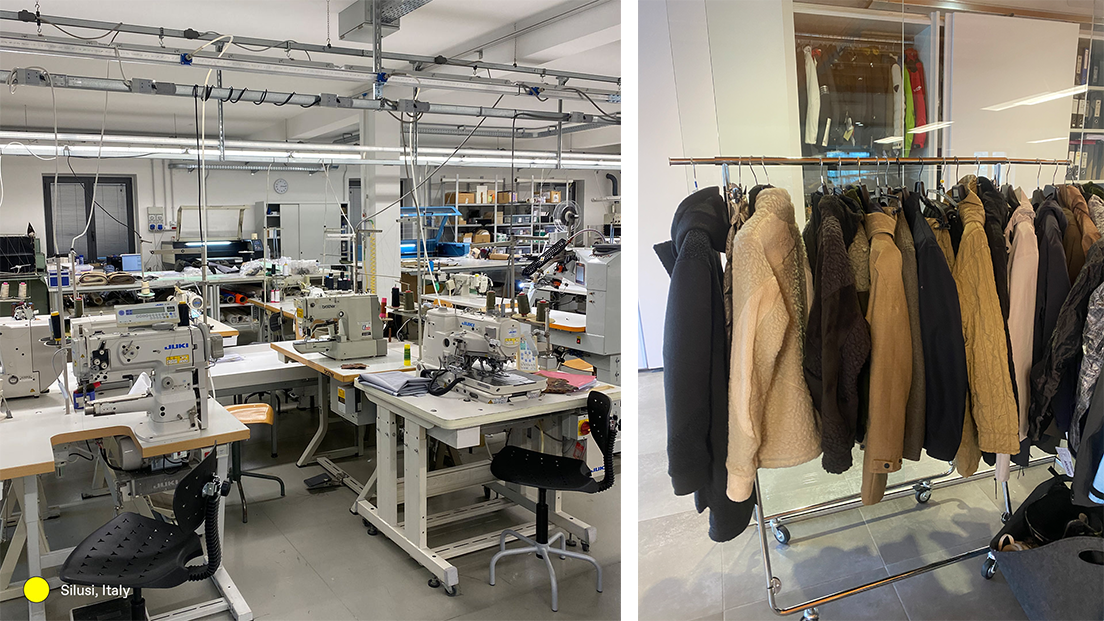
I am currently working on a windbreaker for AW24. After discussing the style with my new Portuguese factory, instead of taking it on, they were very honest and said their speciality centres more around jersey and knit products. Therefore, I was forced to look elsewhere. After a few more factory visits around Europe, I came across this wonderful factory in Italy that produces outerwear for Prada Red Line, Gucci, Herno, Kjus, and Vollebak. They were specialists in woven fabrics and outerwear garments, and therefore I placed the sample with them instead.
Why is this important in managing and overcoming issues? If I were to place the garment with the Portuguese factory, they may have eventually got there with the style. However, the process would have very likely been more expensive, there would be more samples to review and amend, and therefore a far longer product lead time.
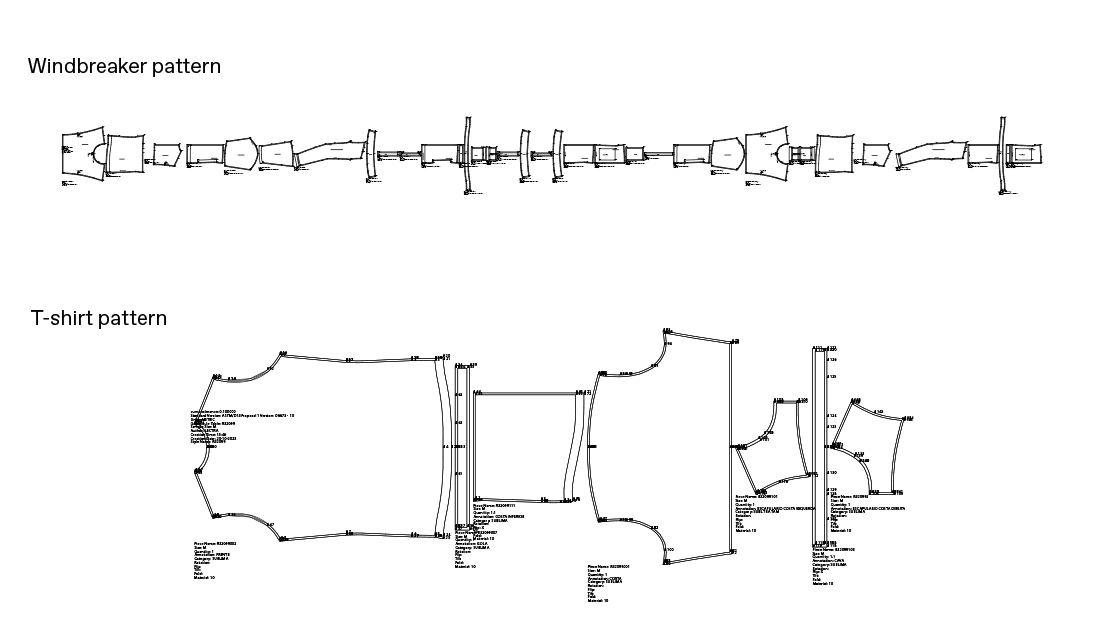
You’re best finding a factory that specialises in the garments you’re trying to produce. Making a pattern for a jacket is also very different to a pattern for a t-shirt lets say. If you’re relying on the factories in-house pattern maker, you want someone who has vast experience creating patterns for outerwear to reduce the margin for error at 1st prototypes. You can see just how complex a pattern for an outerwear piece is compared to a t-shirt, and why having an experienced pattern maker is crucial to minimising issues during the sampling process.
Design Review & Tech Pack Updates
A large chunk of addressing issues in sampling, of course, arises after you receive your 1st prototype. When you have your first sample, you have the opportunity to sit down with your designer and developer to go through the style in detail, discussing any issues you may have seen, as well as general changes you want to make.
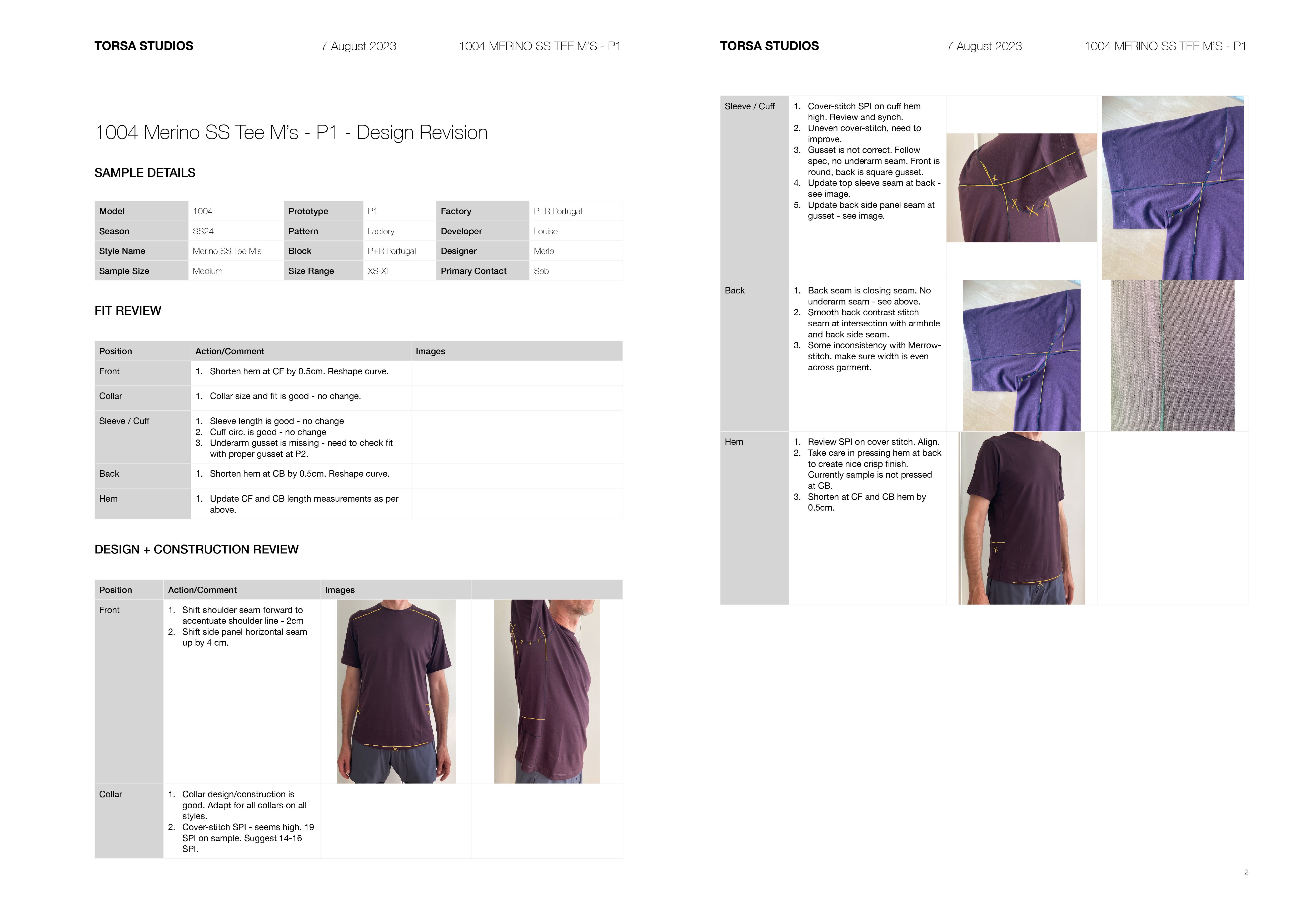
From my experience, the design review (seen above) usually comes first. In Torsa’s current setup, I will sit down with the designer and review the sample(s). Here, we’d look primarily at the design as a whole, rather than garment fit. Yes, the garment fit will come into it but not not at a granular level, this is left to the product developer / garment tech.
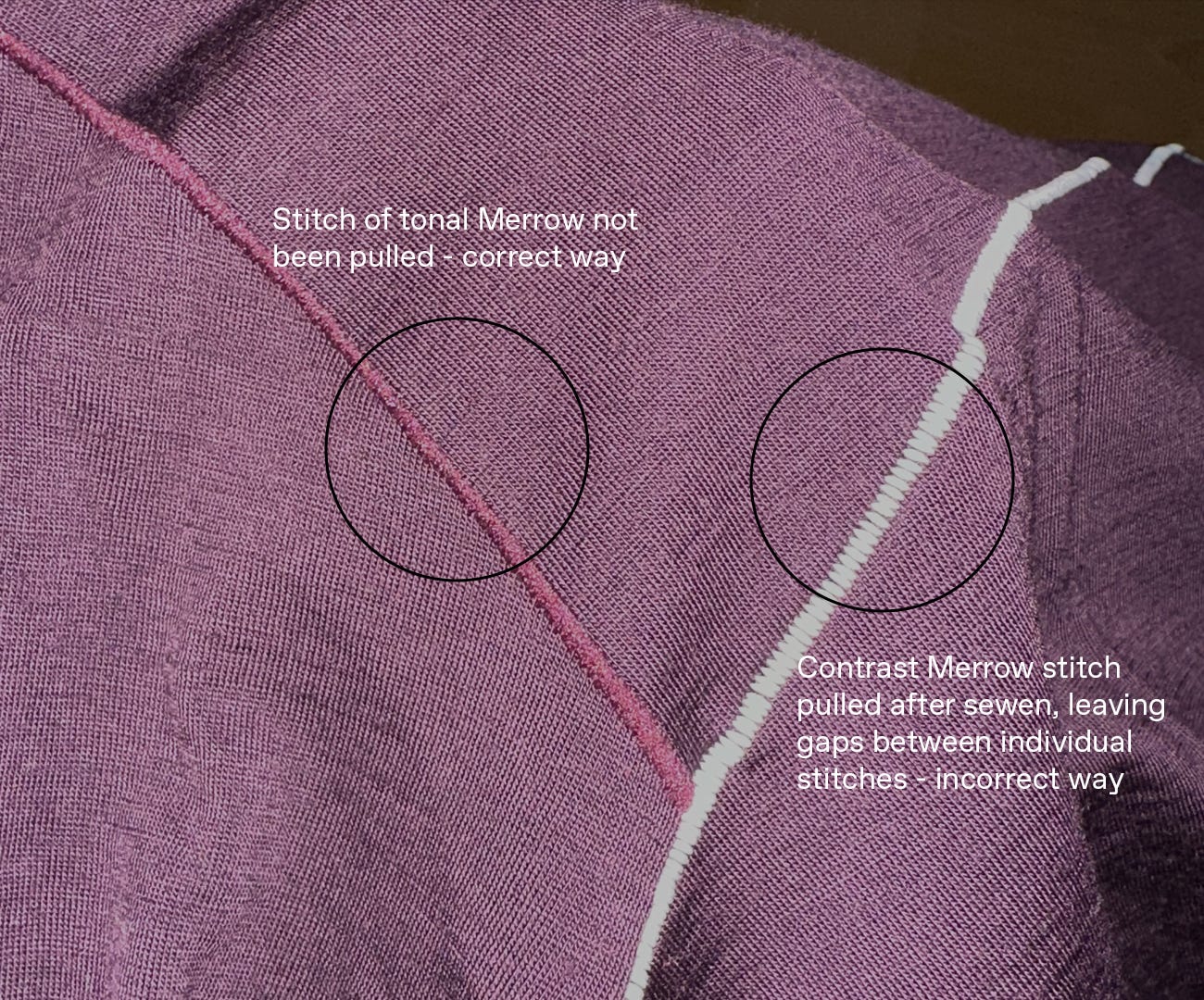
At the design review stage, we’d look at elements such as style lines, neckline finish, stitching and seaming, pocket placement and so on. A good example of addressing an issue from our AW24 Merino t-shirt for example was the Merrow® stitch inconsistency. This stitch is a specific seam using USA made Merrow® machines and offers a unique, durable and stretch resistant seam which is perfect for activewear. It’s hard to track these machines down but our factory in Portugal has a Merrow® machine so we wanted to take advantage of that.
However, after reviewing the first sample, we noticed that one of the Merrow® stitches had tight bunching and the contrast Merrow® has been ‘pulled apart’ at the sampling stage. In this case, this inconsistency was picked up at the design review stage, updated on the design review doc which then gets sent to our product developer to update the tech pack.
Fit Sessions
The design review and subsequent fit session are critical stages in managing the issues at first sample. As I mentioned, the design review addresses all things design, but only touches the basics around fit. The key measurements are the responsibility of the product developer during the fit session. I have mentioned the fit session countless times, but this is the stage where that first sample is fit onto an actual fit model - to review how the garment looks on the body.
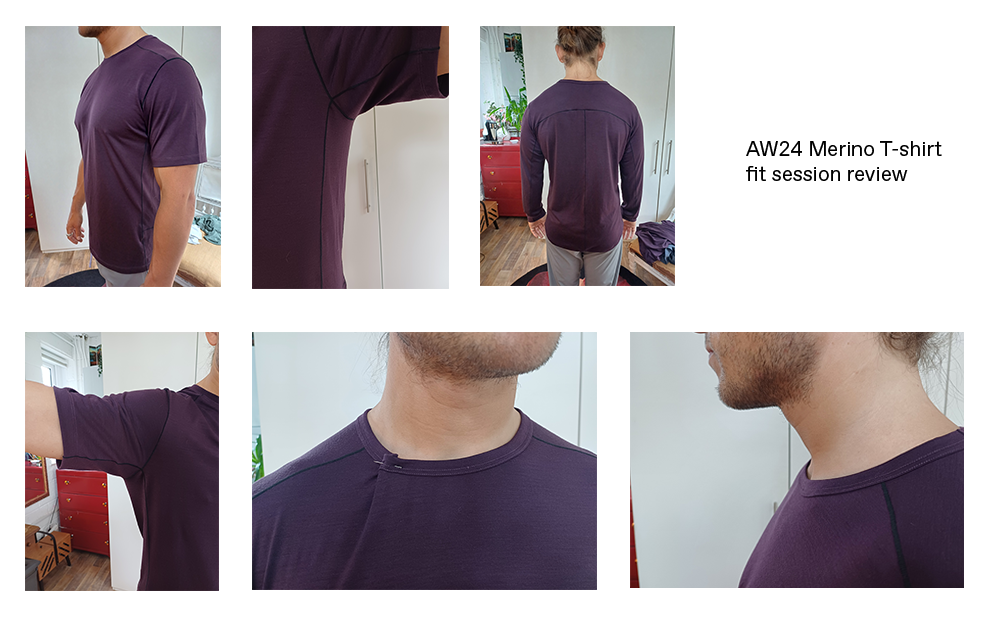
This step is of critical importance. Understanding how the initial measurements have been translated into a block pattern by the factories pattern maker (or in-house pattern maker) and then made up into a garment ultimately leads to the garment fit.
At this stage, there will always be amendments. Fitting a garment to make sure it works on a range of different physiques in the same size is very difficult. The value of a great product developer and/or pattern maker can’t be overlooked.
There could be simple amendments like adjusting the neckline by 1cm, but in some cases, amendments with fit can be more drastic. This normally revolves around garments that are more complex, and those that require gussets to aid movement. Especially if you’re not working with an in-house pattern maker, I’ve noticed gusset shapes is one thing which really needs time and expertise to get right.
All fit changes will be updated on the measurement spec on the tech pack, and any diagrams indicating a shift in style lines, hem shape, stitch angle (essentially things that can’t be translated on the measurement chart) will be highlighted through diagrams.
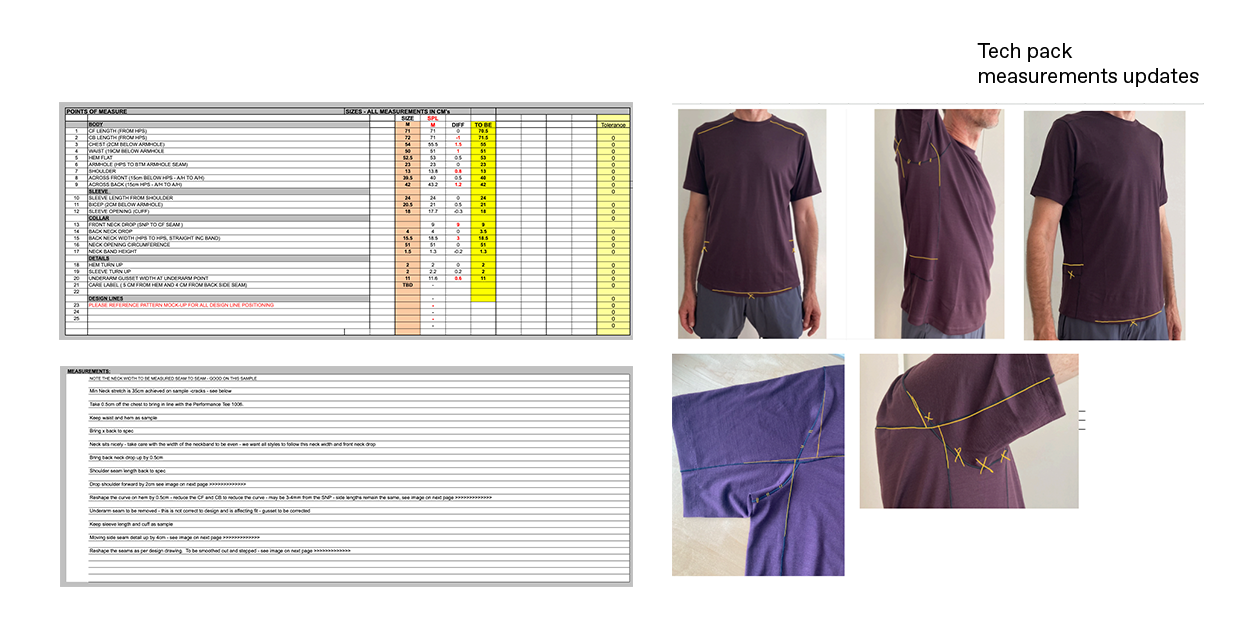
Mock ups and Clear Communication
I’ve covered the importance of mock ups previously, but in the scheme of managing issues, they are critical. In essence, mock ups are the best way to overcome issues before they even arrive.
Looking at our new T-stitch application on our AW24 woven garments. This hand stitched embroidery is a new mark for us and highlights the level of detail we try to put into every garment. However, because we have placed AW24 with two different factories in Europe, naturally, the embroidery was done at two different locations. Instead of just sending artwork of what we want (which is of course is part of the process), we wanted to approve the T-stitch before it was applied to the garment. If I were to show the garments to wholesale, I wanted to make sure the T-stitch applications were identical, and therefore got both factories to send a mock-up, which you can see below;
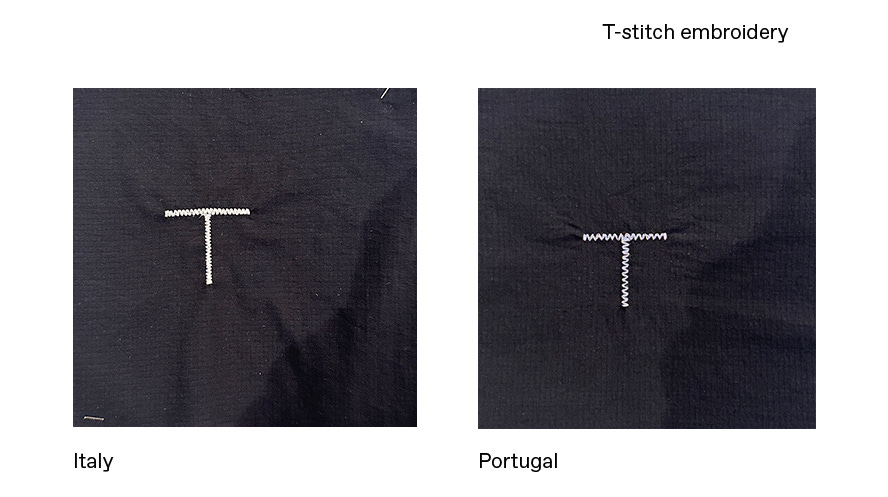
As you can see, they clearly differ - one being more tightly packed, and the other spread out. I preferred the Portugal stitch width and dimensions, and therefore sent that mock-up to Italy to replicate, which they did successfully. This ensured that the first sample I received from Italy (the windbreaker) and those received from Portugal, had a consistent T-stitch throughout.
This isn’t so much of an issue, but ensuring a consistency. Lets look at a primary issue we could have faced during the sampling of our AW24 windbreaker, that was addressed before sampling.
In our quest to create the cleanest look to our windbreaker, we wanted to minimise any external stitching. Therefore, our plan was to create a heat-bonded hem which essentially means the seam is closed by glue, and therefore no stitch is visible. However, at 45gsm and 46gsm respectively, the designer knew this may not be possible because of the lightness, and therefore the chance of leaving an impression from the glue. Instead of proceeding straight with the 1st sample, we got the factory in Italy to do a ‘heat bonding’ test on both fabric options. As you can see below, this left an impression on the fabric and we were unable to proceed with this approach.
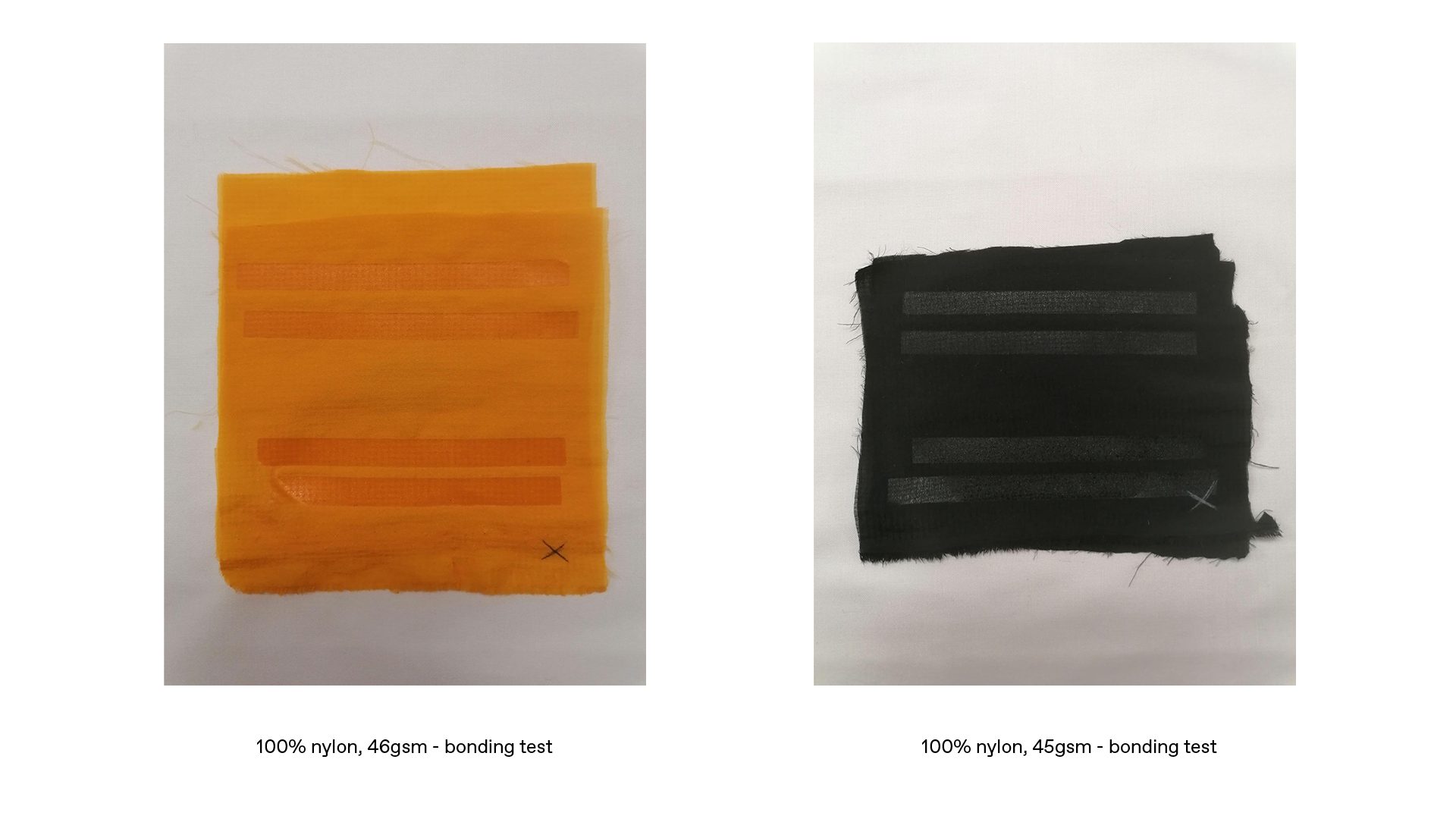
Rather than waiting for the first sample to be made, we were able to identify the issue ahead of time. This is an important part of managing the issues; identifying them before they arise.
If you have a very good designer and developer with experience, they will be able to identify potential problem areas of certain garments before sampling. Bear in mind, this may not always be the case, as all factories are different, and have differing capabilities. In my case, the designer working on our AW24 collection had spent 7 years at Arc’teryx and worked with some of the most technical manufacturers in the world. A brand that big may have come up with an alternative solution for the bonded hem, but we simply don’t have the resources or in-house team to figure it out, so we simplified.
It is, however, an important point when designing your range with your designer. I was fortunate enough to work with the best designer I have ever worked with for this collection, but her level of detail, quality and expectations in some cases exceeded the factories capabilities. This meant that we had to do a bit more nurturing and training with the factory to get to the right end product. Complexity can be somewhat of a crutch in design, especially when you’re working with a new factory. It’s essential to talk through the product with the factory to ensure they are on the same page. Below is a simplified example of the level of detail that our designer worked with, just for the pocket construction of our training pant;
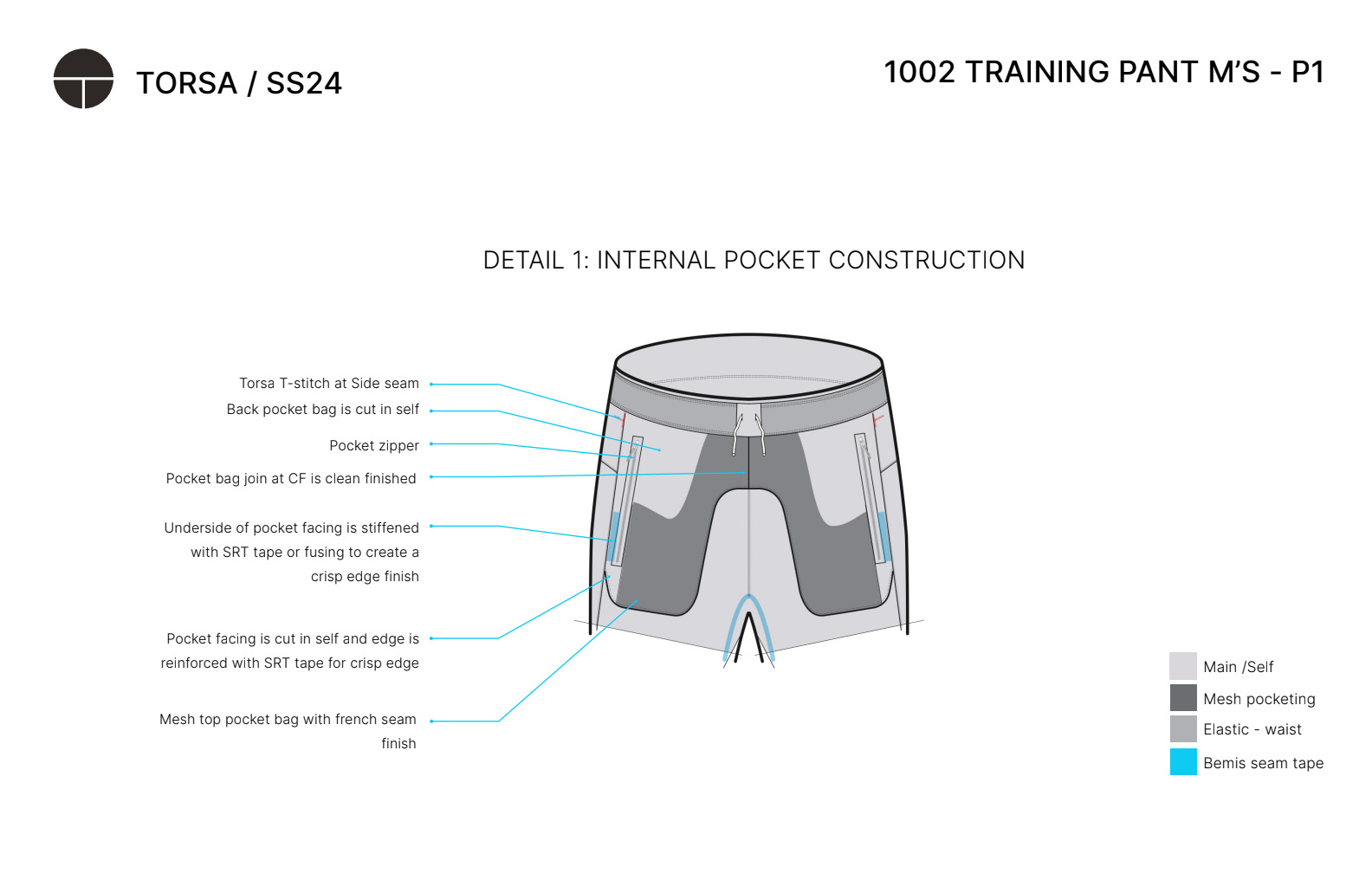
Information like this can easily be misunderstood by the factory. That’s why having a handover call for each style is critical, alongside providing detailed tech packs, reference images, and construction CADs.
Final Thread
Sampling is one of the most frustrating and rewarding stages of running a business. On the one hand, you have this amazing concept for a product and can see it in your mind, but on the other hand, there is executing that vision perfectly - this is the hard bit.
My biggest advice for overcoming issues in sampling is having clear communication with your factory. Ideally, you want to flag any issues before they arise, but if something slips through the net, be crystal clear with your factory what the issues are, and how they are going to be solved.
This is where having a great product developer helps. They are responsible for translating the information onto the tech pack for the factory to follow. Below is an example of just one section of comments from our AW24 training pant style on the tech pack after our 1st prototype;
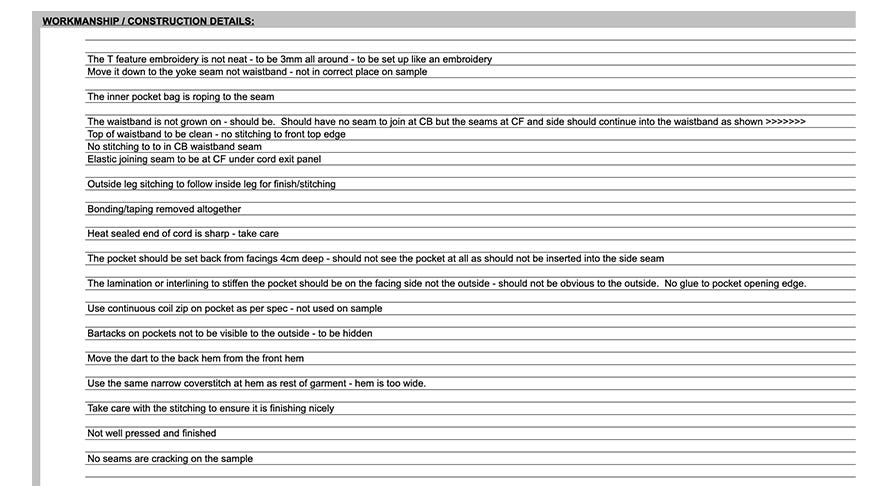
These comments will also need to be done for;
Measurements
Fabric Type / Colour / Additional purposes
Labelling / Packaging
Logos
Accessories
Another key point is understanding a factories limitations. You may be working with a fantastic European or Asian manufacturer, but if they don’t have the machinery, proper guidance, or know-how to execute something, it’s important to get them to share that with you. Complexity can be one of the biggest sticking points when it comes to design. It’s also your responsibility as a founder to talk this through with your designer as they may have to simplify their design process to ensure a easier sampling process for the factory.
If you have any questions about sampling, please connect with me on LinkedIn, or drop me an email.